Compare deck railing materials, views, cleaning needs, and installation considerations before choosing a complete system for your home.
Choose a complete railing system, not just a look
Deck railing affects the view, upkeep, and character of an outdoor space. Wood, aluminum, cable, and glass offer different tradeoffs. Compare them as installed systems with suitable posts, connections, stairs, and infill rather than choosing from a photo alone.
A guard at a deck edge and a graspable stair handrail serve different purposes; the design may need both. Height, openings, attachment, and other requirements depend on the applicable rules and selected system. Have the design checked instead of assuming that copying another deck makes it compliant.
Wood railing: flexible appearance with ongoing finish work
Wood can suit a traditional deck and allow a coordinated stained or painted appearance. It can also involve more surfaces to clean and refinish than homeowners expect: rails, posts, and individual balusters all need attention.
Ask how the finish will be maintained and how exposed cuts and connections are detailed. If the deck surface will be composite, decide whether you are comfortable maintaining a wood railing around it. Mixing materials can make sense, but should be an intentional maintenance choice.
Aluminum railing: slim profiles and a consistent finish
Aluminum systems can provide a clean outline without the same refinishing routine as wood. Compare post size, top-rail shape, baluster spacing, color, and stair components using actual samples. A dark rail may feel less visually prominent against landscaping, while a light rail can make the deck edge more noticeable.
Low maintenance still includes cleaning and checking for damage. Follow the exact manufacturer's care instructions; Trex's railing care overview is one example of product-specific guidance. Avoid assuming a cleaner approved for one finish is suitable for every system.
Cable railing: open views with specific structural details
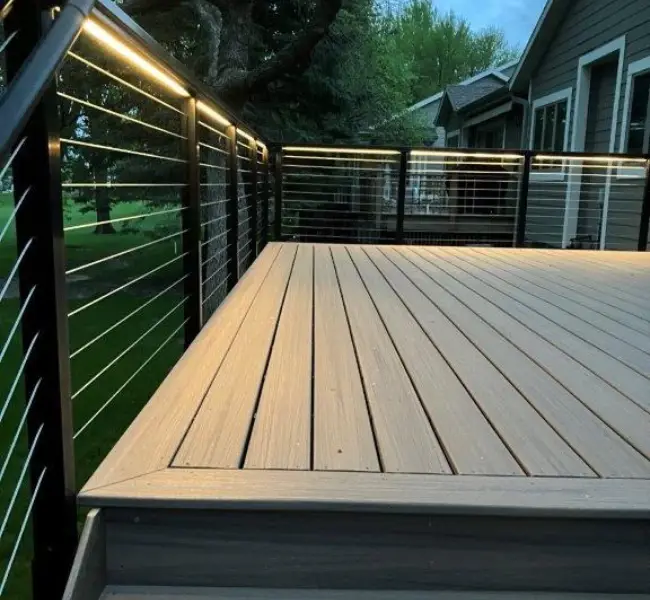
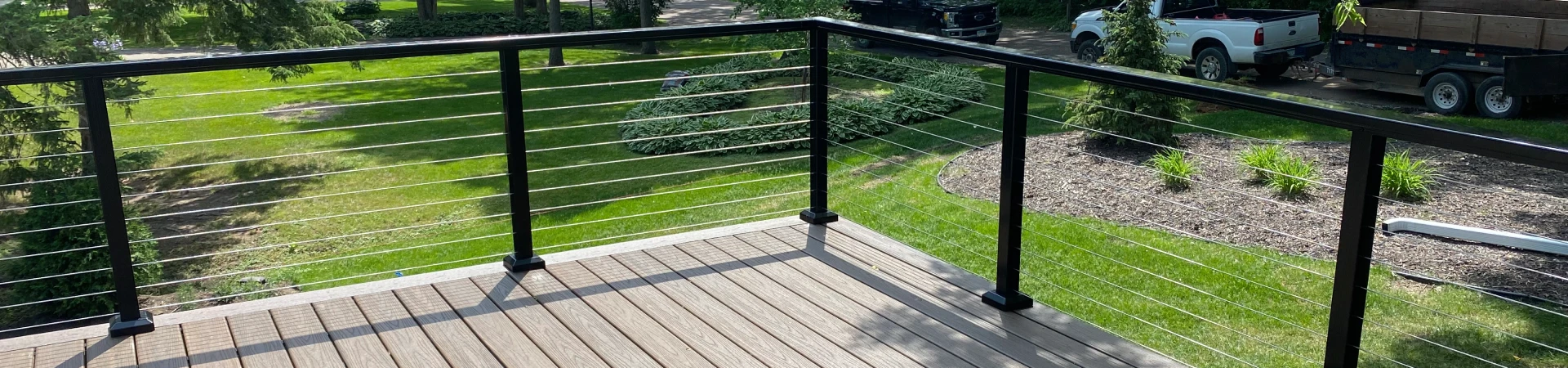
Cable can preserve long views with narrow lines, but it is not simply wire stretched between ordinary posts. End conditions, post construction, spacing, tension, and connectors need to suit the system. Plan corners and stairs early because they affect both appearance and installation.
Discuss inspection and maintenance access before choosing cable. Feeney's technical resources include system instructions and tensioning information; use the documentation for the selected product rather than general internet spacing advice.
If openness is the main goal, compare a cable sample with slim vertical balusters from the distance where you will sit. The visual difference may be less dramatic than close-up product photography suggests.
Glass railing: broad views and more visible cleaning needs
Glass panels can offer a broad view while providing a more continuous barrier than open infill. They can also show fingerprints, pollen, and water marks. Think about access to both sides for cleaning, especially on an elevated deck.
Specify a tested railing assembly and the glass required by that system; ordinary window glass is not a substitute. Trex's glass railing information illustrates how panels belong to a defined frame and component system. Review the exact installation requirements with the builder.
Compare priorities before comparing quotes
| Option | Why consider it? | Ask about |
|---|---|---|
| Wood | Traditional appearance and finish choices | Refinishing, exposed details, and repairs |
| Aluminum | Slim profiles and a factory finish | Complete stair components and finish care |
| Cable | Open views with narrow infill | Post design, tension, corners, and upkeep |
| Glass | Broad views through panels | Specified glass, cleaning access, and replacement |
Compare the full railing length and number of stair sections, not only the per-panel price. Existing posts may need replacement or reinforcement. If the deck is being resurfaced, coordinate post connections before the new boards conceal access.
Use your view and maintenance preferences to narrow the choice
Look outward from the doorway and from seated height. Note neighboring windows, the yard, and any lake or landscape view. Privacy needs may call for a separate, appropriately designed feature rather than an improvised addition to a guard.
For examples of finished railing details, see the black aluminum railings on this Minnetonka deck and the white railing system on the Wayzata resurfacing project.
Brewer Built's deck railing services and the Edina deck and railing project provide a starting point for the conversation. Request an estimate with approximate railing lengths and the two options you would most like to compare.
Replacing railings during a deck renovation
Settle post locations and connections before new decking covers the framing. Ask whether the railing work includes removal, repairs where old posts were attached, stair handrails, and trim around new posts. Review our deck renovation options if railing replacement is only one part of an aging deck's needs.