Learn when an existing deck can be resurfaced, when replacement makes more sense, and what a structural assessment should cover.
Start with the structure, not the surface
Deck resurfacing replaces worn walking boards while retaining a suitable supporting structure. Replacement rebuilds the deck when that structure, layout, or connection to the house no longer fits the project. The useful question is not simply whether the boards look old: it is whether the parts you would keep are worth building on.
For Minnesota homeowners, snow, water exposure, and repeated seasonal movement make this an important distinction. New decking can improve the surface, but it cannot correct a deteriorated ledger, settling support, or inadequate connection hidden below it. Start with an assessment before selecting boards or comparing quotes.
Trex's resurfacing guidance makes sound framing and foundations a prerequisite for retaining an existing deck. A contractor should also check compatibility with the exact replacement material.
What should be checked before resurfacing?
Ask for a review of the deck from below as well as above. The scope should identify retained components, required repairs, and conditions that cannot be confirmed until boards are removed.
- Footings and posts: condition, alignment, movement, and support for the proposed work.
- Beams and joists: deterioration, sagging, connections, and spacing suitable for the new decking.
- House connection: attachment, flashing, and evidence of water damage.
- Stairs and guards: attachment, stability, and compatibility with the finished deck height.
- Drainage: recurring wet areas and trapped debris around structural members.
Visible movement, a loose guard, or separation from the house warrants prompt professional assessment. Keep people away from an area that appears unstable rather than using new boards to cover the problem. The age of the deck alone is not enough to certify its condition.
Compare three realistic scopes
| Option | When to discuss it | What to clarify |
|---|---|---|
| Targeted repair | A limited issue on an otherwise suitable deck | Whether the underlying cause is also being corrected |
| Resurfacing | Suitable retained framing with a surface that needs renewal | Framing modifications, rails, stairs, and concealed-condition allowances |
| Replacement | Structural deterioration or a major change in layout or use | Demolition, new supports, drainage, and the full finished scope |
A resurfacing proposal that requires substantial structural repairs may approach the scope of a replacement. Ask for both options when the retained frame needs significant work. Comparing complete installed scopes is more useful than comparing decking-board prices.
Changing materials can change the work below them
Wood, composite, and PVC products have different installation details. Existing joist spacing, board direction, stair supports, and fasteners must be checked against the chosen product. A decorative border can require additional blocking even when the main boards fit the existing frame.
Consider the expected service of the retained structure alongside your material investment. It is frustrating to install a premium surface and later remove it to correct unresolved framing problems. Our deck floor covering guide explains the material choices, while deck materials introduces the options available for planning.
Use a real project to discuss your priorities
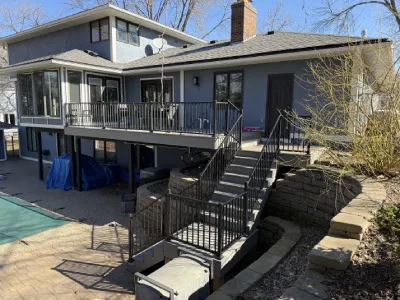
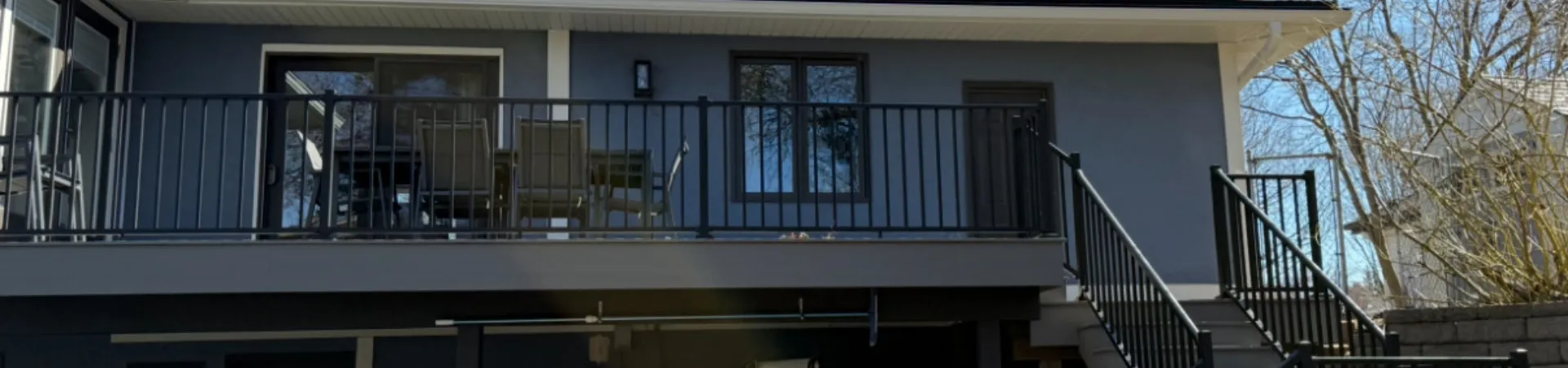
Brewer Built's Edina extension and resurfacing project combined TimberTech decking, new railings, and updated stairs. It shows how surface work can be coordinated with a larger improvement. It does not mean every existing frame can be retained or extended.
Bring photos of the top, underside, stairs, and house connection to your first conversation. Describe what you dislike about the existing deck: upkeep, limited space, uncomfortable stairs, or its condition. If the layout already works, retaining suitable portions may be worth investigating. If access and size need major changes, evaluate a new design before committing to reuse.
Ask for a clear repair and replacement plan
Have the proposal explain how newly discovered damage will be documented and priced. Clarify permit responsibility, disposal, and which existing components remain. Consult your municipality through our permit resources; requirements depend on the work and location.
Explore deck repairs, resurfacing, and replacement services, then request an estimate that compares the appropriate options for your home.