Prepare your deck for winter with material-specific cleaning, drainage checks, accessory storage, and careful snow and ice management.
Prepare the deck before wet leaves and freezing weather overlap
Winter preparation is mostly about keeping water moving, protecting the surface from avoidable damage, and spotting concerns while they are easy to see. The right routine depends on whether your deck is wood, composite, or PVC and on the care instructions for its exact product.
Choose a mild, dry period for cleaning and inspection. If you are unsure what decking you have, look for purchase records, installer information, or product identification before applying cleaners or ice-melt products. A method that works on concrete may not suit a deck surface.
Clear leaves and inspect areas that stay damp
Remove leaves, dirt, and debris from the walking surface and accessible drainage paths. Move planters and furniture long enough to inspect underneath. Persistent damp patches may point to trapped debris, an incompatible mat, or runoff that needs attention.
Use cleaning products and methods approved for the material. Follow dilution, rinsing, and temperature directions rather than making a stronger mix. Avoid leaving a wet surface to freeze across the route to the yard or stairs.
For wood, determine whether finishing is due and whether the coating's application conditions can actually be met. Applying a finish just before cold weather is not helpful if the surface moisture or temperature is outside its instructions. Plan that work for suitable conditions rather than forcing it into the last warm afternoon.
Store and secure accessories thoughtfully
Clean and store cushions and accessories according to their labels. Secure lightweight items that could move in wind. Lift heavy objects rather than dragging them across the boards, and check that furniture feet will not damage the surface.
Review mats, rugs, and protective covers for compatibility with the decking. A cover or container that traps moisture against boards can create a different problem from the one you intended to prevent. Leave a practical path to doors and stairs, and keep drainage outlets accessible.
If you plan to store heavy items on the deck, do not assume unused winter space has unlimited load capacity. Discuss unusual loads with a qualified professional.
Use material-specific snow and ice guidance
For TimberTech decking, the manufacturer's care and cleaning guide advises against metal shovels and plastic shovels with a metal leading edge because they can damage the surface. Follow the instructions for your own product and use gentle methods rather than chopping ice with a sharp tool.
Check the approved ingredients before using an ice-melt product; do not assume every salt blend is interchangeable. Follow product and decking directions for application and cleanup. Cleaning residue should wait until conditions make the work safe.
No surface is slip-proof when wet or icy. Keep walking routes manageable, use appropriate footwear, and avoid working on a slick deck when you cannot do so safely. There is no universal snow-depth threshold that establishes whether every deck is safe: snow density, drifting, and the deck's design and condition all matter. Seek qualified help if you are concerned about accumulation or movement.
Watch where meltwater goes
Look for roof runoff or downspouts that concentrate water on stairs and door landings. Repeated ice in one location is a reason to review the drainage path, not merely add more deicer. Keep accessible outlets clear without dismantling systems or climbing into unsafe areas.
If you have under-deck drainage, follow that system's maintenance instructions and check accessible gutters and outlets. Our under-deck drainage guide explains why a finished ceiling and a working water-management system are separate considerations.
After thawing periods, note where water remains and photograph recurring conditions from a safe location. Those observations can help a contractor understand a problem that is not visible on a dry day.
Do not postpone an obvious structural concern
Loose guards, unstable stairs, unusual sagging, or separation at the house deserve professional evaluation. Keep people away from an area that appears unsafe. Winter maintenance is not a substitute for repairing a structural issue.
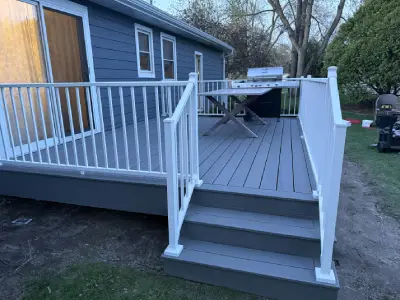
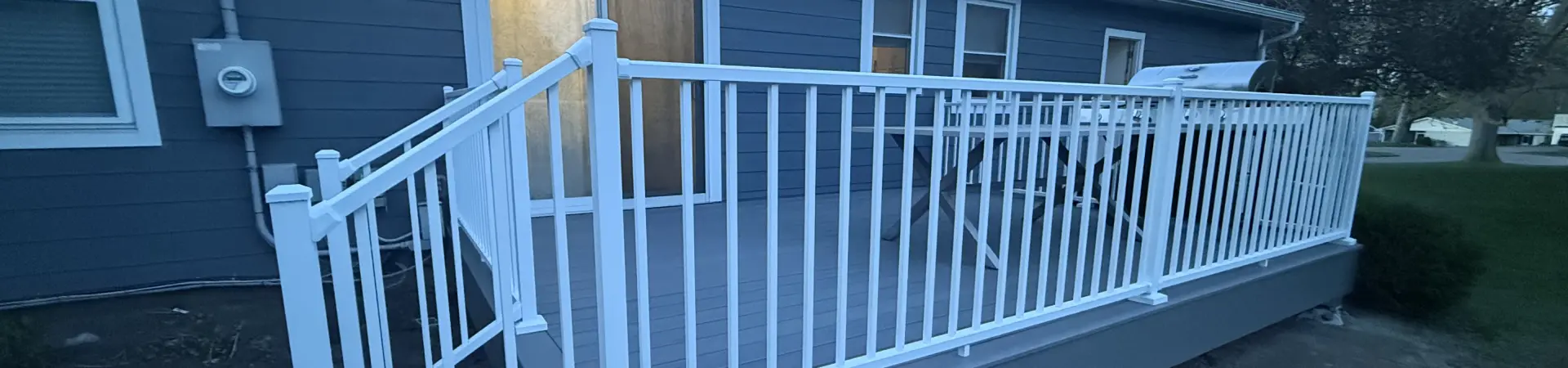
For less urgent planning, make a list of worn boards, finish concerns, and layout changes you would like to discuss. Read resurfacing versus replacement to understand the possible scopes. The project photograph below illustrates an existing deck surface; it is not a winter inspection record.
Explore deck repair and replacement services, or request an estimate with photos and a description of the issue. For material-specific upkeep, keep your manufacturer's current instructions with the home's maintenance records.